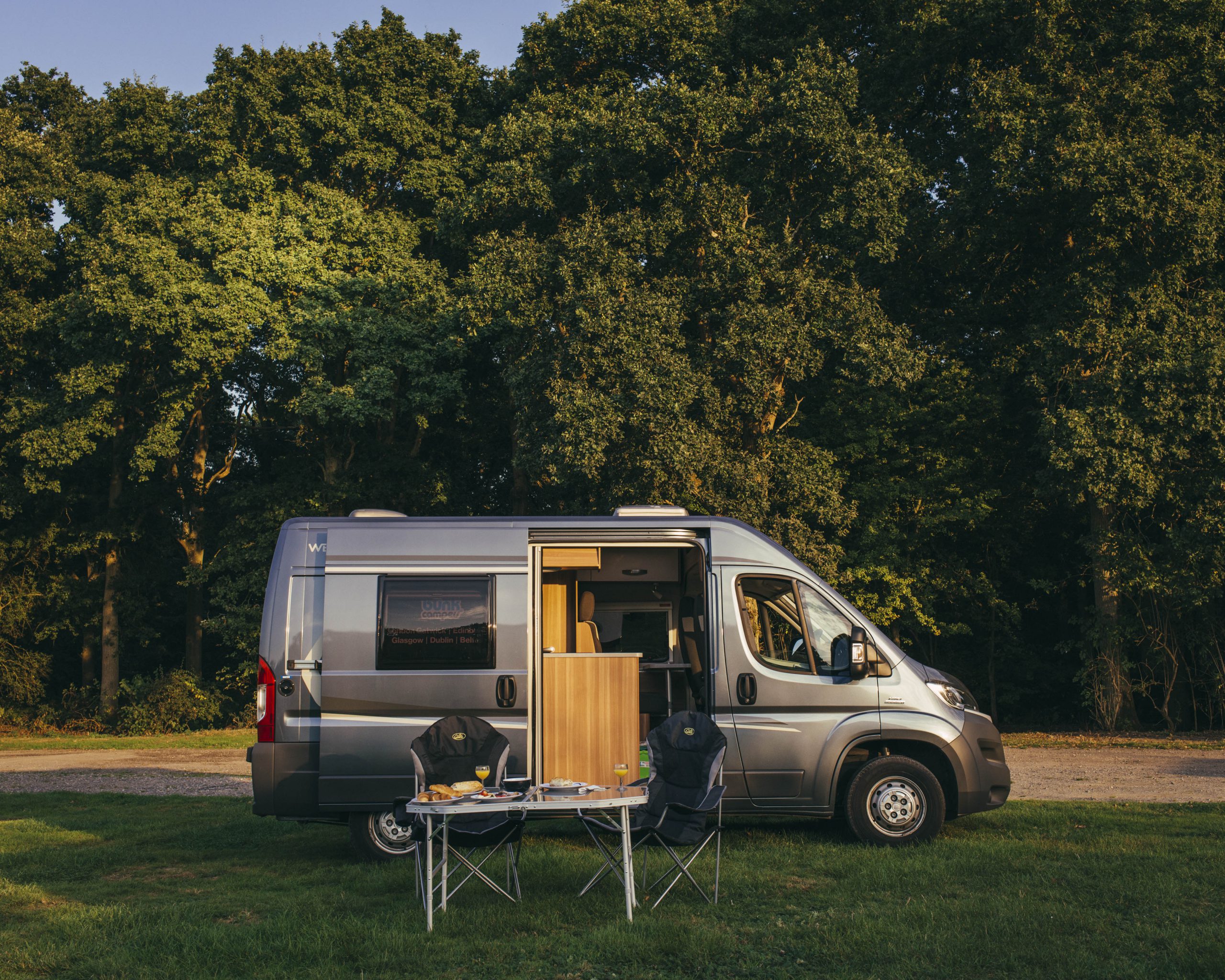

So you're looking at buying a campervan? There's a lot to consider, but a structured approach will keep you on track. Here's a summary of the key advice from the Caravan and Motorhome Club's buyer guide.
Campervan or motorhome?
If you want something small, easy to drive and economical, a campervan is hard to beat. They're usually cheaper than motorhomes for fuel, parts, tolls, insurance and tax, while still giving you a full pitch at most campsites with room around you for outdoor living.
Start with a plan
Write down your must-haves, your nice-to-haves, and your deal-breakers before you start browsing. A few questions to answer:
- How will you sleep? Transverse bed, island bed, fold-away or bunks - the layout drives everything else.
- How much room do you need in the cab, and how much storage for your trips?
- Who's using it - solo, as a couple, or the whole family?
Set your budget - and pad it
Your budget determines whether you buy new or used, but remember to factor in the extras: insurance, servicing and repairs, breakdown cover, camping equipment, finance interest, storage, and fuel.
What size is right for you?
The guide breaks campervans into four sizes:
- Mini-campervan - small, affordable and easy to park; sleeps two with limited storage.
- Small - still sleeps two, but adds a kitchen and toilet area.
- Medium - can sleep up to four with a kitchen, bathroom and some storage.
- Large/XL - full living space with extra seating and storage and room to move around.
Essential pre-purchase checks
- Is it stolen? Check receipts, registration history, and look for signs of tampering with locks, the VIN or weight plate.
- Water damage - use a damp meter or get a professional check; water ingress is expensive to fix.
- Tyres - check tread, cracks and sidewall splits, especially if it's been stored. Replace every 4–5 years.
- Service history - gas, electrics and heating should be checked annually.
- The rest - glass, lights, heating/air-con, brakes, oil leaks and bodywork.
Licence and insurance
If you passed your test before 1 January 1997 you can drive vehicles up to 7,500kg. Pass after that and you're limited to 3,500kg - so check the weight before you buy, as you may need a C1 entitlement. Specialist campervan insurance is a must.
Read the full guide on the Caravan and Motorhome Club website for the complete checklist.